schedule New episode every Saturday · 7:00 PM Pacific
Home  /  Recipes  /  Appetizers
tapas Appetizers

Blooming Onion Petals

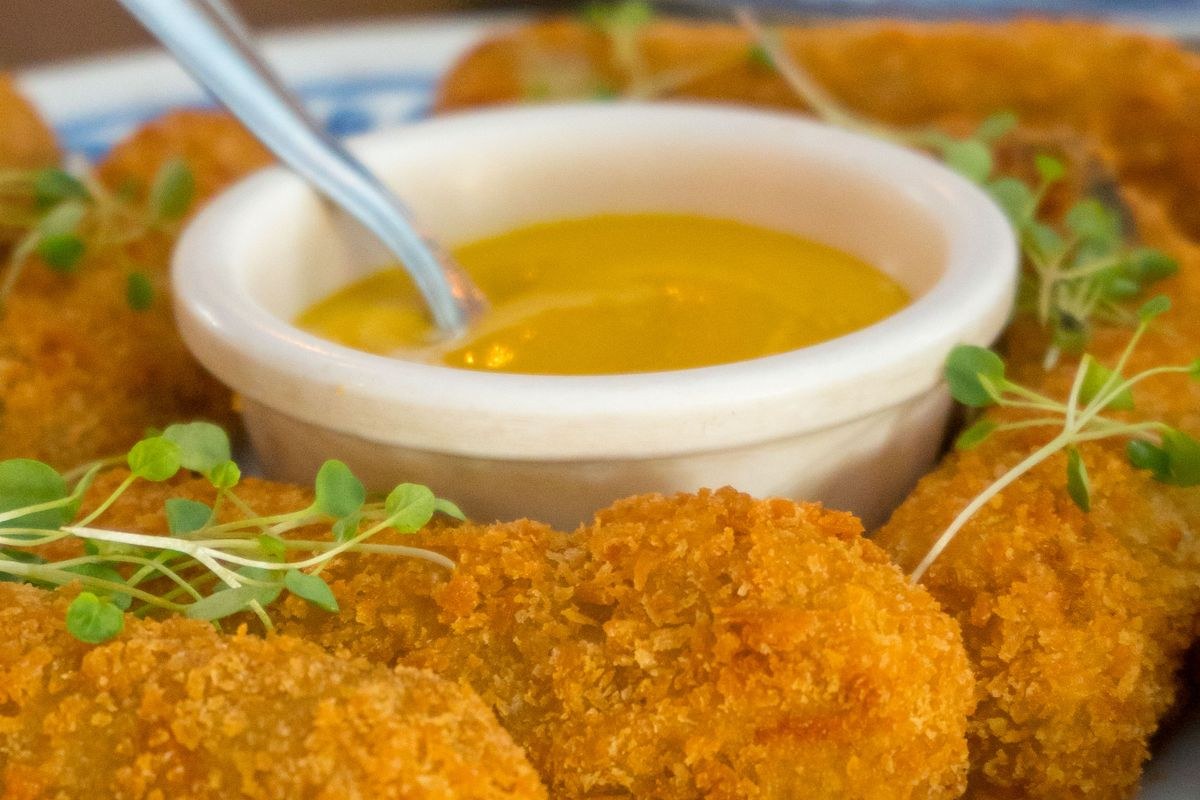
The steakhouse blooming onion, taken apart. Same sweet onion, same craggy seasoned dredge, same three sauces, minus the part where you lower an entire flower into a vat of oil and hope. Individual petals fry evenly in three minutes instead of unevenly in seven, and you get more crust on every single piece.

Total time
45 min
Serves
6
Difficulty
Medium
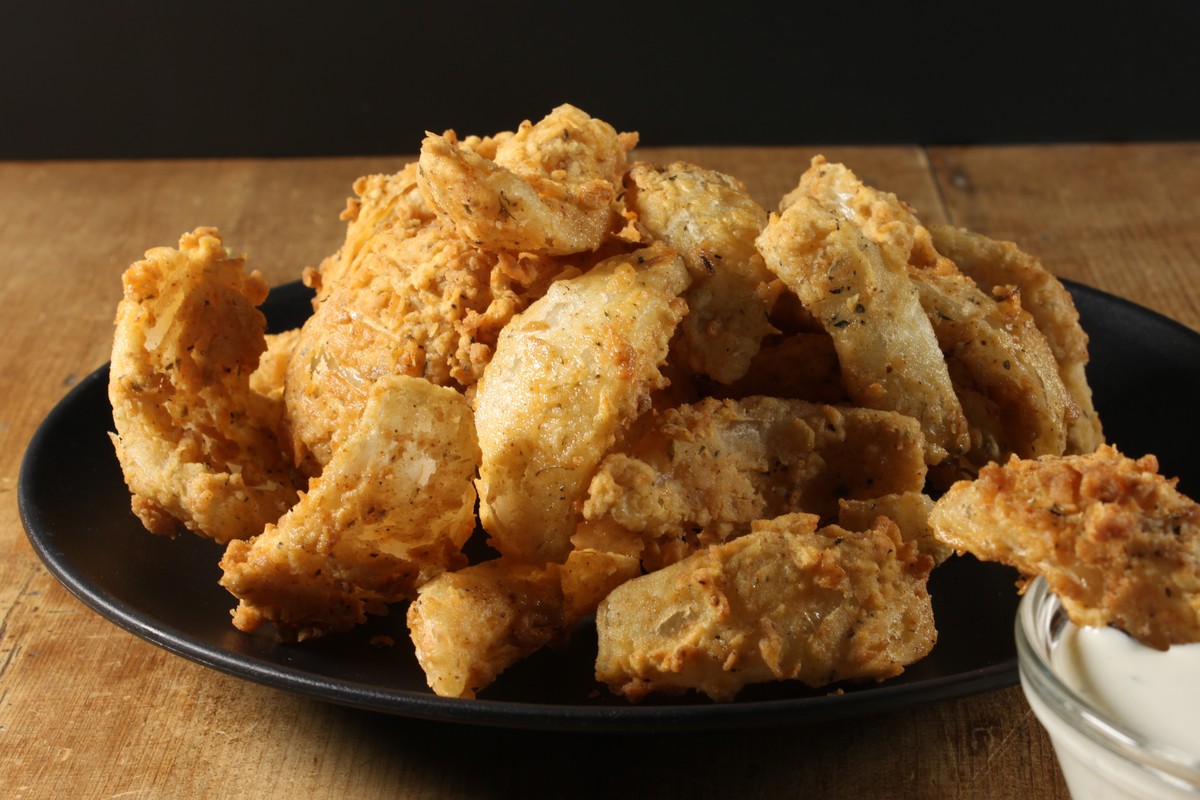
Blooming Onion Petals
As seen on Episode 284

The preparation

10 steps, about 45 minutes start to finish.

  1. 01

    1. Safety first: wet towel under the cutting board, sharp knife, and your fingers curled back behind the blade the whole time. The onion wants to roll. Cutting a flat off the top is the first thing you do partly so it stops.

  2. 02

    2. The blooming cut, once, because it is worth seeing: cut 1/2 inch off the stem end and peel, leaving the root completely intact. Stand it root side down. Starting 1/2 inch out from the root, cut down into 4 quarters, stopping short of the root every time, then each quarter into 4 again. Sixteen petals, still attached.

  3. 03

    3. NOW TAKE IT APART. Cut through the root and separate the wedges, then push the layers apart with your thumbs into individual petals. That is the whole deconstruction, and it takes about twenty seconds.

  4. 04

    4. THE FAST WAY for the other onions, once you have shown the cut: halve them pole to pole, cut each half into wedges, and separate the layers. Same petals, a quarter of the work, and nobody can tell them apart on the plate.

  5. 05

    5. Soak: petals into the ice water for 30 minutes. They are already separated so nothing needs to open; the soak is here to pull the harsh sulfur edge out and to firm them up so they hold their shape in the dredge.

  6. 06

    6. Whisk the seasoned flour ingredients together in a wide bowl. In a second bowl, whisk the buttermilk, eggs, and hot sauce.

  7. 07

    7. Double dredge, IN BATCHES: lift a handful of petals out of the water and shake them off. Toss in the seasoned flour, then into the buttermilk wash, then back into the flour, pressing so the coating goes craggy. Lay them out on a wire rack in a single layer. This is where petals beat the whole onion outright: every surface gets coated instead of you spooning flour into a flower and hoping.

  8. 08

    8. Chill: rack into the fridge for 15 minutes so the coating sets and stops sliding off in the oil. Do not skip this.

  9. 09

    9. Fry: heat the oil to 350F. Fry in batches, one loose layer at a time and never crowded, about 2 to 3 minutes each until deep gold. Stir them apart with the spider in the first few seconds so they do not clump.

  10. 10

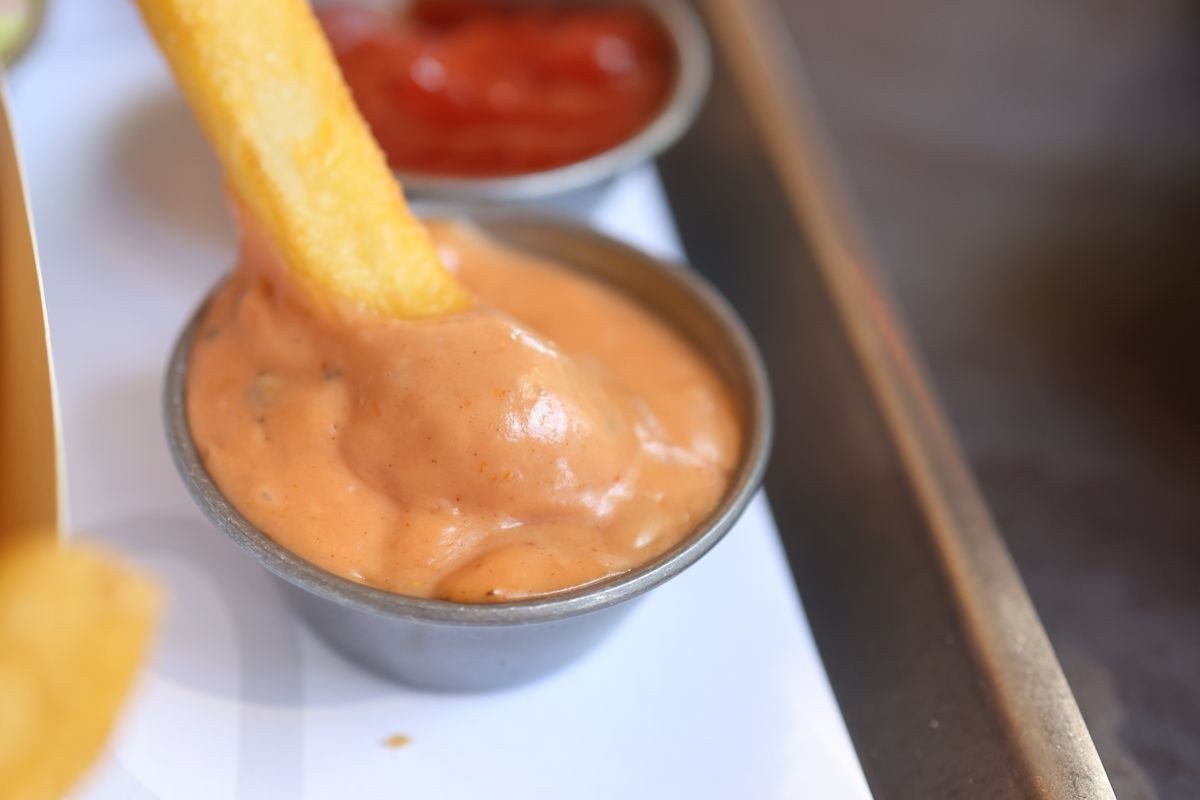
    10. Drain on a rack, not paper towels, and hit them with flaky salt while they are still glistening. Pile them onto a board with the three sauces, scatter the parsley, and serve immediately.

lightbulb The chef's notes

“This fixes a real flaw in the restaurant version rather than just saving you work. On a whole blooming onion the thick petals down near the root are still half raw when the thin tips have already gone dark, because they all go into the same oil for the same seven minutes. Separated petals are all roughly the same thickness, so they cook evenly in two to three minutes and every one of them is crisp. The trade is the tableside moment, and that is a real loss, so do the blooming cut on the first onion anyway and let people see it before you take it apart. Do not crowd the pot: too many petals at once drops the oil temperature and you get greasy instead of crisp, which is the only way to ruin these. Fry in batches and keep the finished ones on a rack in a 200F oven if you want them all hot at once.”

More from Appetizers

Join the conversation

Made this one?

Show the Side Dish crew how it turned out, or ask a question, over in our Discord.

forum Join us on Discord